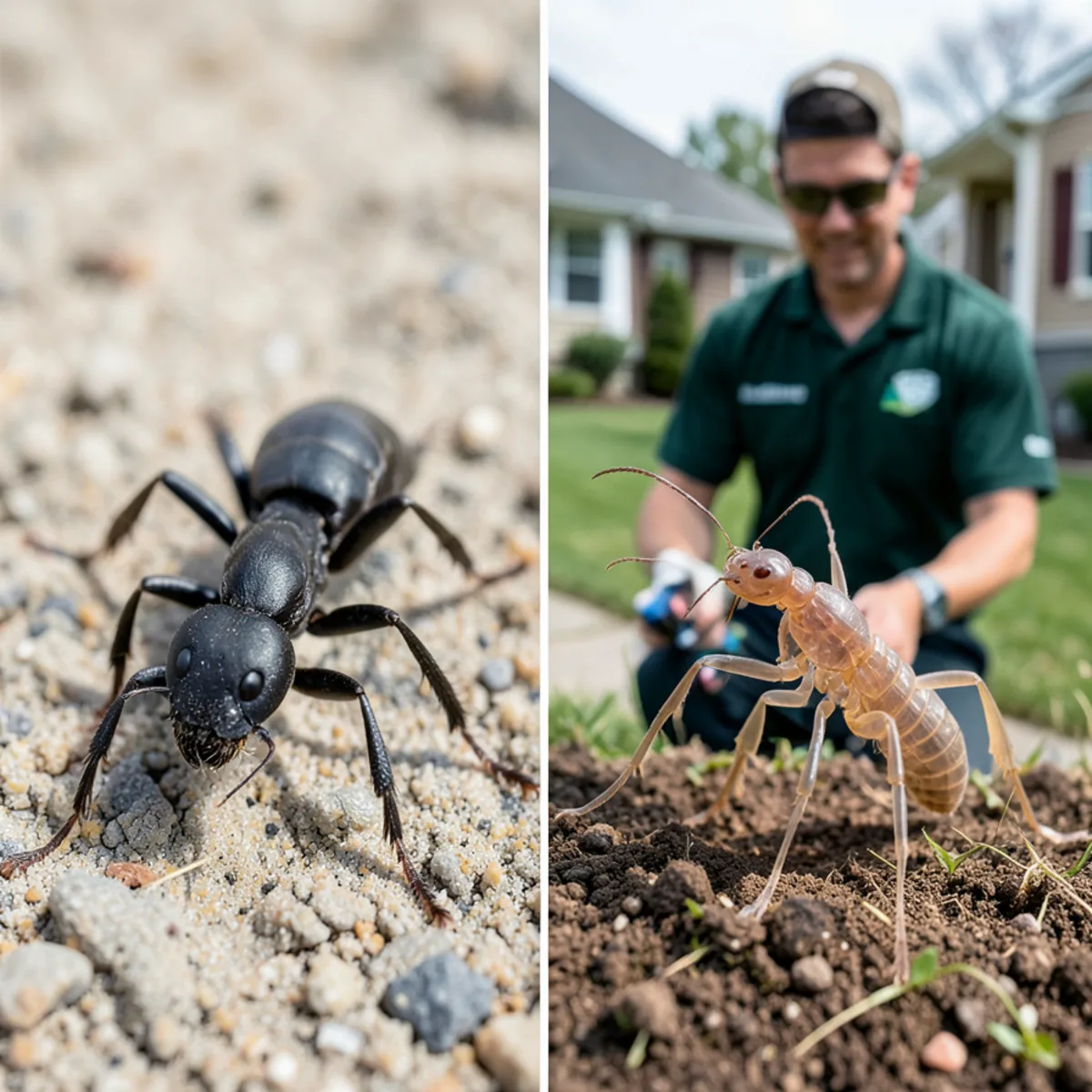
Finding wood damage or winged insects in your home? Learn the clear anatomical and physical differences between carpenter ants and subterranean termites.
Wood-Destroying Invaders: Why Accurate Identification Matters
Finding insect damage or winged swarmers in your basement or on your porch can be alarming. In western Pennsylvania, structural wood damage is overwhelmingly caused by one of two species: black carpenter ants (Camponotus pennsylvanicus) or eastern subterranean termites (Reticulitermes flavipes). While both compromise structural integrity, their biology, feeding habits, and treatment protocols are completely different. Knowing how to identify each organism ensures you choose the correct remediation approach.
Dealing with Active Pests in Butler County?
Call our local Butler dispatch desk at (321) 496-4080 for immediate guidance and inspection scheduling.
Carpenter Ants vs. Subterranean Termites: Visual & Behavioral Identification
Homeowners discovering wood damage in Butler County frequently confuse black carpenter ants (Camponotus pennsylvanicus) with eastern subterranean termites (Reticulitermes flavipes). While both species excavate structural timbers, their biology, damage characteristics, and treatment protocols are entirely distinct. Termites are true wood-eaters (xylophagous); they ingest cellulose using specialized protozoa in their digestive tracts to break down wood fibers. In contrast, carpenter ants do not eat wood. They use powerful mandibles to excavate smooth, clean nesting galleries, discarding shredded wood fragments ("frass") outside the nest opening. Termites remain hidden within moist soil and mud tubes because their soft bodies dehydrate rapidly in open air. Carpenter ant workers, however, forage openly across kitchen floors, decks, and tree branches in search of honeydew and protein.
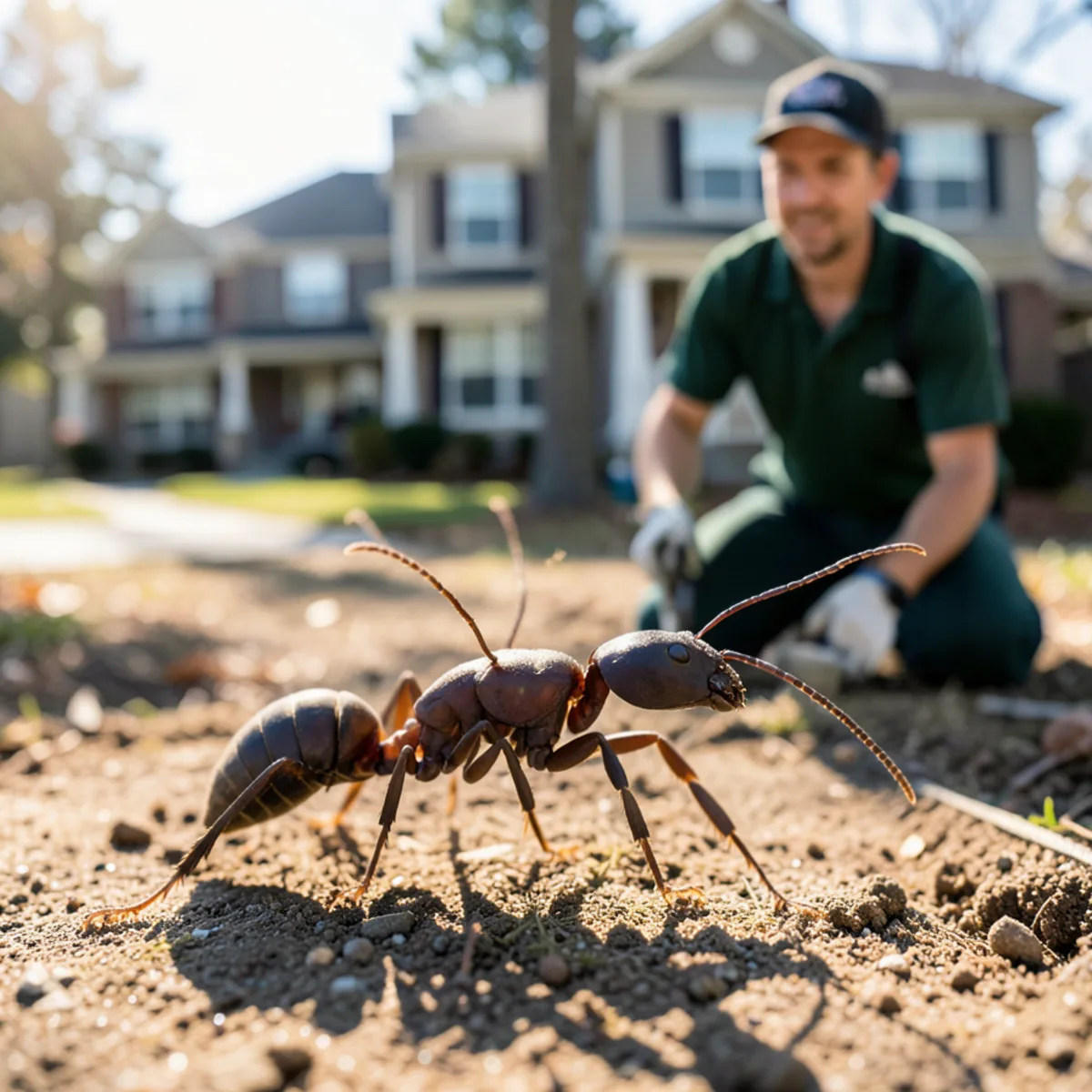
Side-by-Side Comparison: Anatomy, Frass, and Damage Signs
Use this definitive diagnostic table to identify whether you are confronting carpenter ants or subterranean termites.
| Diagnostic Feature | Black Carpenter Ants (Camponotus) | Eastern Subterranean Termites (Reticulitermes) |
|---|---|---|
| Body Waist | Narrow, pinched waist (pedicel) between thorax and abdomen | Broad, thick waist with no distinct body narrowing |
| Antennae Shape | Elbowed (bent at a sharp 90-degree angle) | Straight, bead-like appearance resembling a string of pearls |
| Wing Proportions (Swarmers) | Front wings are distinctly longer than shorter hind wings | All four wings are equal in length and shed easily |
| Excavated Wood Texture | Clean, smooth galleries resembling polished sandpaper | Rough, honeycombed galleries packed with moist soil and mud |
| Frass & Residue | Accumulations of fine sawdust, wood slivers, and insect parts | No frass; build mud shelter tubes to retain moisture |
| Structural Sound | Faint rustling or crinkling sound inside walls when tapped | Hollow, dull thud when tapped with a screwdriver handle |
Behavioral Differences: Negative Phototaxis vs. Active Scent Trails
Beyond visual and acoustic cues, behavioral patterns during peak diurnal hours provide valuable diagnostic clues. Subterranean termites exhibit extreme negative phototaxis (light avoidance) and will desiccate within hours if exposed to open household airflow, which is why their foraging is entirely enclosed inside earthen shelter tubes. In contrast, carpenter ant workers show purposeful foraging behavior, walking along established pheromone scent trails across foundation sills, carpet borders, and countertops, often traveling up to 100 yards from their primary outdoor parent colony in search of sugar or insect prey.
Immediate Remediation Checklist for Wood-Damaged Framing
If you suspect active wood-destroying insect activity in your home framing, execute these steps before authorizing structural repairs.
Checklist & Preventative Procedures:
- Do not apply broad-spectrum aerosol sprays to active foraging trails, which repels ants and disperses satellite nests.
- Collect a few intact specimen insects in a sealed plastic bag or glass jar for positive professional identification.
- Inspect plumbing valves, roof valleys, and exterior gutters for active moisture leaks feeding the damp wood condition.
- Schedule a comprehensive professional inspection to locate parent and satellite colonies before replacing damaged framing.
Anatomy Comparison: Winged Ants vs. Termite Swarmers
When reproductive swarmers emerge in spring, homeowners often confuse flying carpenter ants with termite swarmers. A quick physical check reveals definitive anatomical differences:
Checklist & Preventative Procedures:
- Waist: Carpenter ants possess a narrow, distinctly pinched "wasp-like" waist. Termites have a broad, uniform waist with no body constriction.
- Antennae: Carpenter ants have bent or elbowed antennae. Termites feature straight, bead-like antennae.
- Wings: Carpenter ants have four wings where the front pair is notably larger than the hind pair. Termite swarmers have four wings of equal size, length, and translucent texture.
Frass vs. Mud Tubes: Comparing Wood Damage Evidence
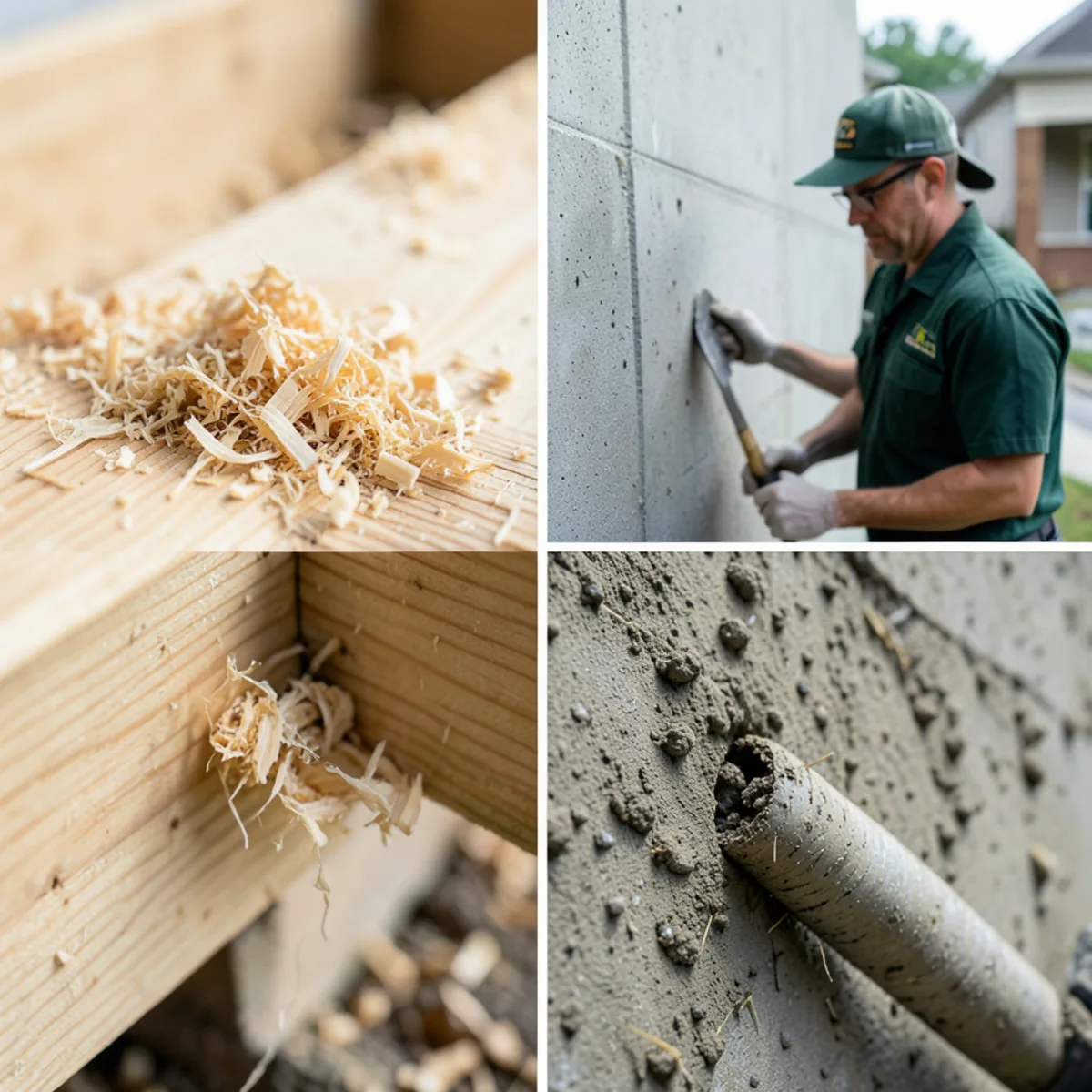
Because termites digest wood cellulose, they construct earthen mud shelter tubes along foundation walls to maintain humidity, leaving damaged wood layered with soil and feces. In contrast, carpenter ants do not eat wood—they chew smooth nesting galleries and kick out the shavings. Finding small cones of coarse sawdust ("frass") containing insect fragments confirms carpenter ants.
Gallery Structure: Smooth Excavation vs. Soil-Packed Tunnels
Examining internal damage reveals contrasting craftsmanship. Carpenter ant galleries are remarkably clean and smooth, resembling wood carved with fine sandpaper. Termite galleries follow the soft springwood grain and are roughly excavated, ragged, and packed with soil and mud packets.
Acoustic Probe Diagnostics & Structural Moisture Detection
Locating concealed wood-destroying insect colonies behind finished drywall or tongue-and-groove paneling requires diagnostic instrumentation beyond simple visual inspection. Certified technicians utilize high-sensitivity acoustic listening probes (such as micro-sensor electronic stethoscopes) capable of detecting the distinct rasping sound of carpenter ant mandibles scraping dry wood fibers or termites tapping their heads against gallery walls when alarmed. Additionally, non-invasive digital moisture meters pinpoint elevated moisture pockets (exceeding 18% wood moisture content) in subfloors, rim joists, and window headers—the precise physical environments where carpenter ants establish secondary satellite nests and termites penetrate framing.
Non-Repellent Transfer Chemistry vs. Social Trophallaxis Baits
The chemical mechanisms used to eliminate carpenter ants and subterranean termites differ fundamentally based on species social biology. Termite colonies comprise hundreds of thousands of blind subterranean workers that constantly groom each other and share regurgitated nutrients. Non-repellent liquid termiticides (such as fipronil) create an undetectable soil barrier; foraging termites pass through treated soil without awareness, coating their cuticles with micro-crystals that are systematically transferred to nestmates through grooming (the "transfer effect"). In contrast, carpenter ant workers forage above ground for carbohydrates and proteins. Targeted carpenter ant remediation utilizes non-repellent indoxacarb or dinotefuran gel and granular baits that workers carry back to satellite nests inside hollow wall voids, exploiting ant social trophallaxis to collapse colonies from within.