
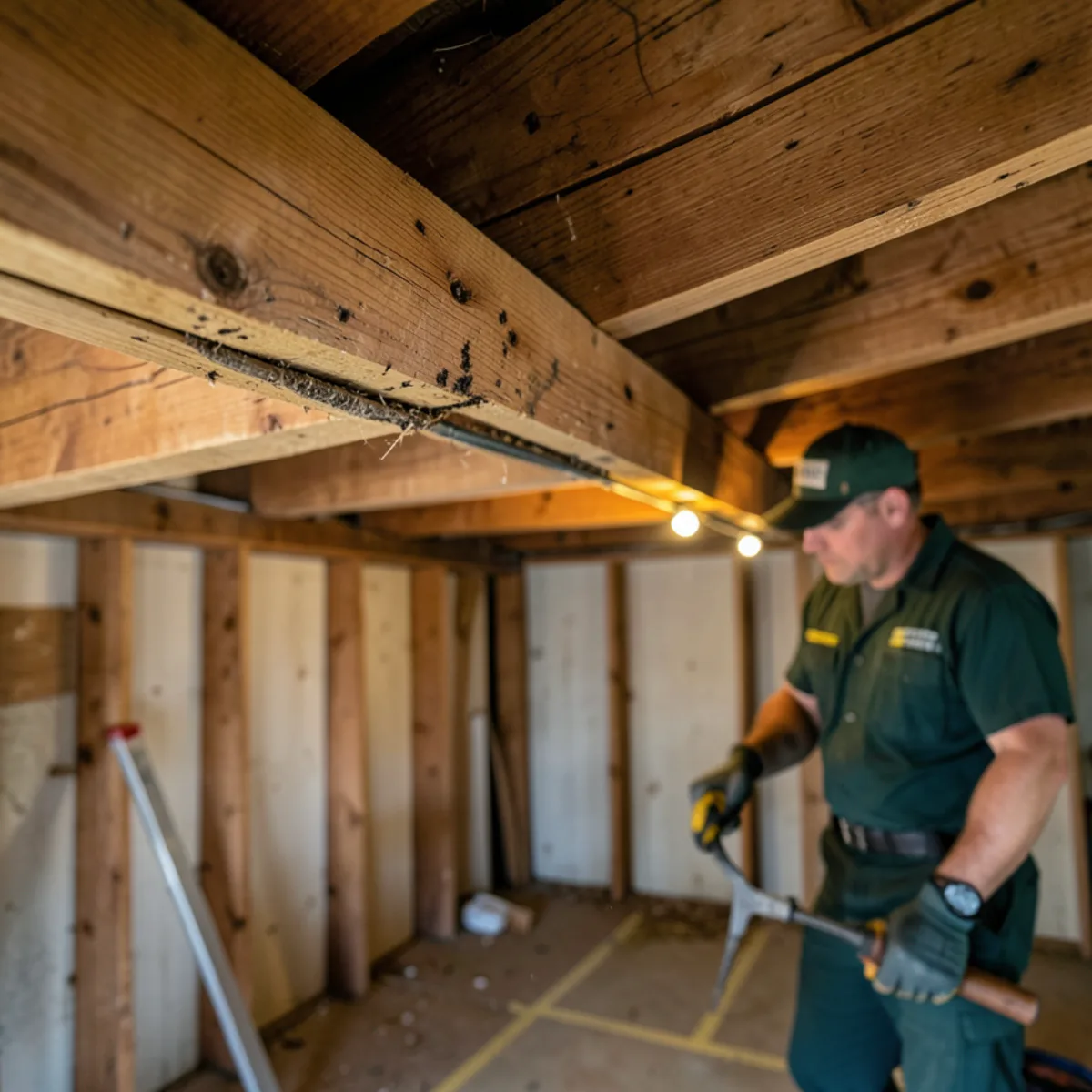
Scratching noises in your ceiling or basement at night? Learn how older Butler foundations invite winter mice and the right way to seal entry points permanently.
Nighttime Scratching: Diagnosing Winter Rodent Activity in Older Basements
As freezing temperatures settle over Butler County from November through February, field mice (Peromyscus leucopus) and common house mice (Mus musculus) must find heated shelter. For older residences in Butler City, Zelienople, Sarver, and Lyndora, century-old stone foundations provide an open invitation. Homeowners often first hear faint rustling, scampering, or rhythmic gnawing sounds in basement ceiling joists, hollow drywall chases, or attic corners between 11:00 PM and 3:00 AM. Ignoring these early warning noises allows a breeding pair of mice to multiply into a colony of dozens within two months.
Dealing with Active Pests in Butler County?
Call our local Butler dispatch desk at (321) 496-4080 for immediate guidance and inspection scheduling.
House Mice vs. White-Footed Deer Mice: Understanding the Local Vectors
In Butler County, residential rodent infestations are divided between two distinct species: the common house mouse (Mus musculus) and the white-footed deer mouse (Peromyscus leucopus). Common house mice have uniformly grayish-brown fur, a lighter gray belly, and a naked, scaly tail. They thrive in urban and suburban environments, nesting within five to ten feet of domestic food sources like pantries and pet bowls. In contrast, white-footed deer mice have distinctive bi-colored fur—rich tawny brown on top with a stark, snow-white belly and white paws. Deer mice dominate rural and woodlot acreage across Butler County, foraging in agricultural crop fields and oak forests. Deer mice are the primary mammalian vector for both Lyme disease spirochetes (harboring blacklegged tick larvae) and pulmonary hantavirus. Because deer mice store large caches of seeds and nuts inside wall cavities, early exclusion is vital to prevent secondary insect infestations.
Thermal Imaging & Inspection Protocol for Winter Basements
Pinpointing where rodents traverse within hollow walls requires more than casual visual checks. In older Butler residences with stone basements or drop ceilings, rodents travel along the top of foundation sill plates and inside joist headers where heating ducts create warm runways. Professional exterminators utilize high-resolution thermal imaging cameras to detect subtle heat signatures generated by rodent nesting clusters behind drywall and insulation batts. Additionally, ultraviolet blacklight inspection illuminates rodent urine trails—which fluoresce bright greenish-yellow—revealing the exact routes mice use between basement cellars and kitchen pantries.
Comprehensive Winter Basement Rodent Exclusion Checklist
Follow these practical structural sealing steps to fortify older Butler homes against winter rodent pressure.
Checklist & Preventative Procedures:
- Pack all plumbing pipe penetrations through stone or block foundation walls with knitted copper mesh (Stuf-fit) sealed with polyurethane.
- Inspect basement hopper windows and dryer vent exhaust hoods for missing damper flaps or rusted lintels.
- Store all pet kibble, wild bird seed, and lawn grass seed in heavy metal containers with tight-fitting lids.
- Ensure garage door bottom rubber gaskets make flush, light-tight contact with the concrete slab across the entire threshold.
- Elevate stored cardboard storage boxes onto metal wire shelving in basements to eliminate hidden nesting harbors.
Why Fieldstone Foundations in Western PA are Prime Rodent Targets
Homes built before 1950 in western Pennsylvania were commonly constructed with fieldstone, sandstone, and lime mortar. Over decades of ground freezing and thawing, subterranean mortar settles and crumbles, leaving cavities behind finished basement walls. A full-grown field mouse can compress its skeleton to squeeze through an opening just one-quarter inch wide—the size of a dime. Once through the foundation wall, mice follow plumbing stacks and electrical cables upward into kitchen islands and bedroom drywall.
Why Chemical Poison Baits Often Backfire Indoors
A common mistake homeowners make is tossing poison bait packets into basements or crawlspaces. Rodents do not "leave the house to find water" after eating poison. Instead, they feel sick, burrow deep into fiberglass wall insulation or under hardwood floor joists, and die. Within 48 hours, decomposition produces an overwhelming, nauseating odor that can linger for three to six weeks and attract blow flies. Professional rodent control focuses on interior mechanical trapping where rodents are captured cleanly and removed without odor.
Permanent Exclusion: Why Copper Mesh Beats Expanding Foam
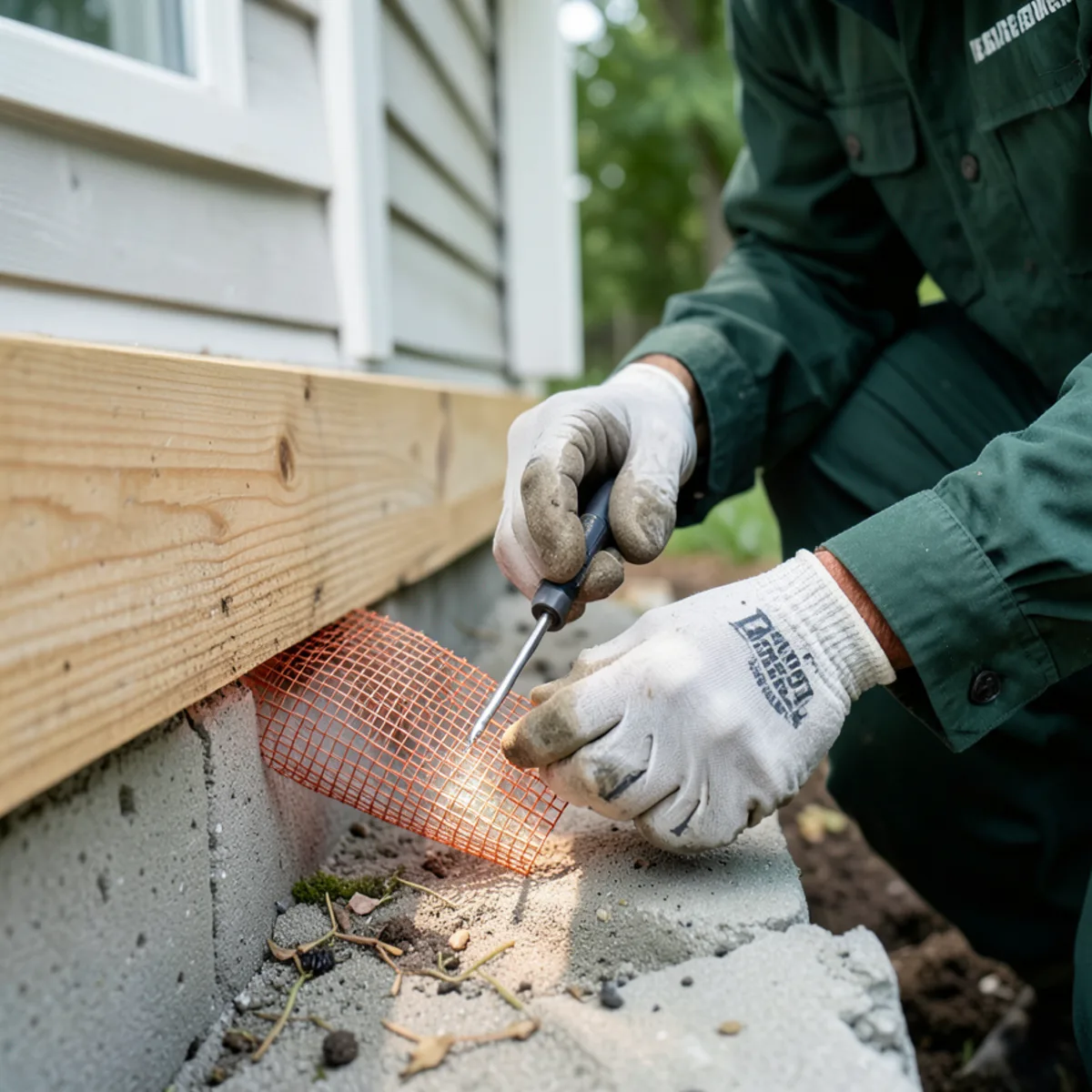
Standard expanding foam from home improvement stores is soft and porous; rodents chew through foam in minutes using their sharp incisors. To create a durable mechanical barrier, technicians pack openings with woven copper wire mesh (Stuf-fit) or 1/4-inch galvanized hardware cloth, then cap the mesh with polyurethane masonry sealant. Copper mesh never rusts, cannot be chewed through, and bonds tightly to rough stone and brick surfaces.
Proper Snap Trap Placement Along Foundation Runways
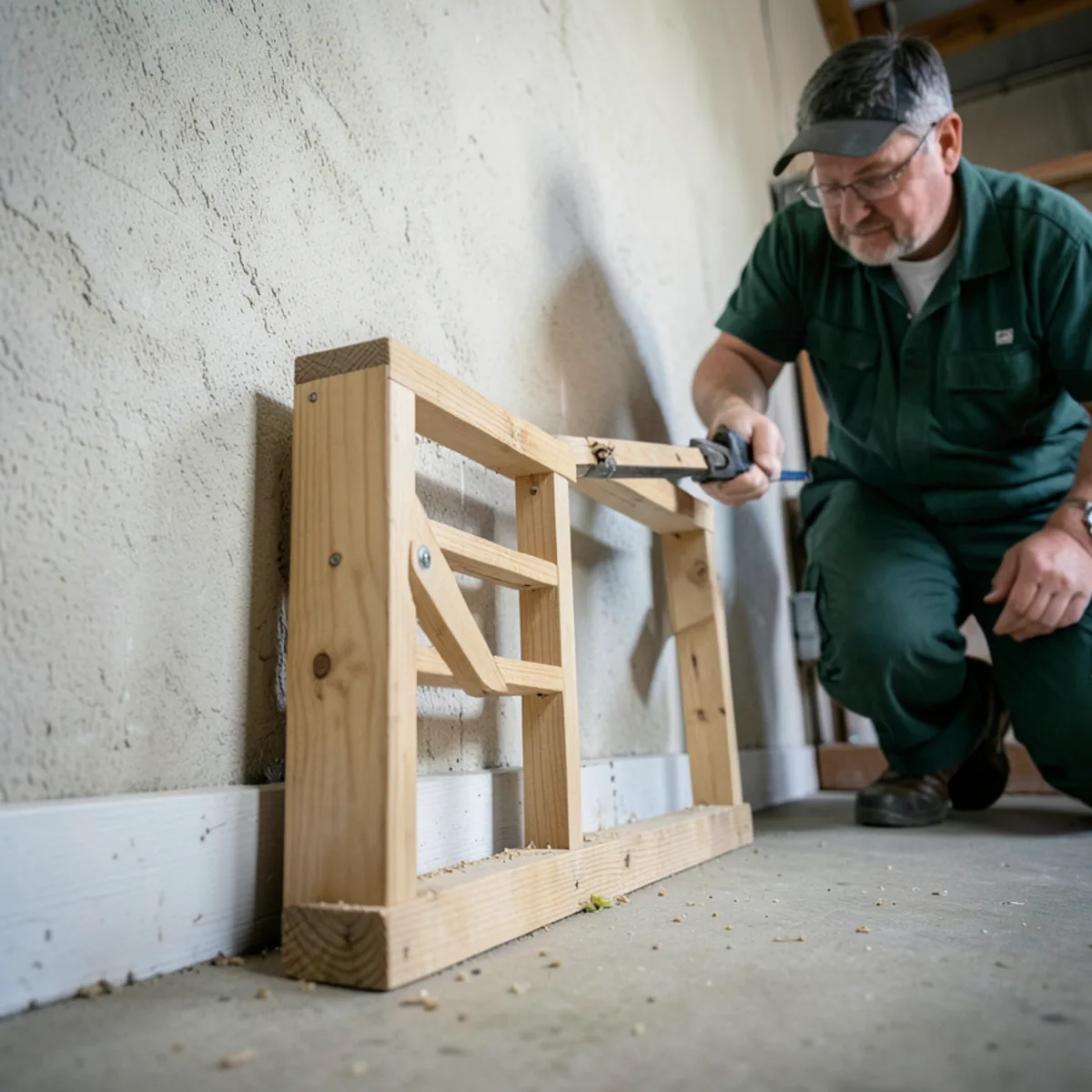
Mice have poor eyesight and navigate by brushing their sensitive whiskers along vertical baseboards and foundation walls. Place wooden or heavy-duty plastic snap traps perpendicular to basement walls, with the baited trigger facing directly against the wall where mice travel. Using a dab of peanut butter or hazelnut spread mixed with a rolled oat provides an irresistible, non-perishable lure.
Professional Runway Inspection: Reading Rub Marks and Droppings
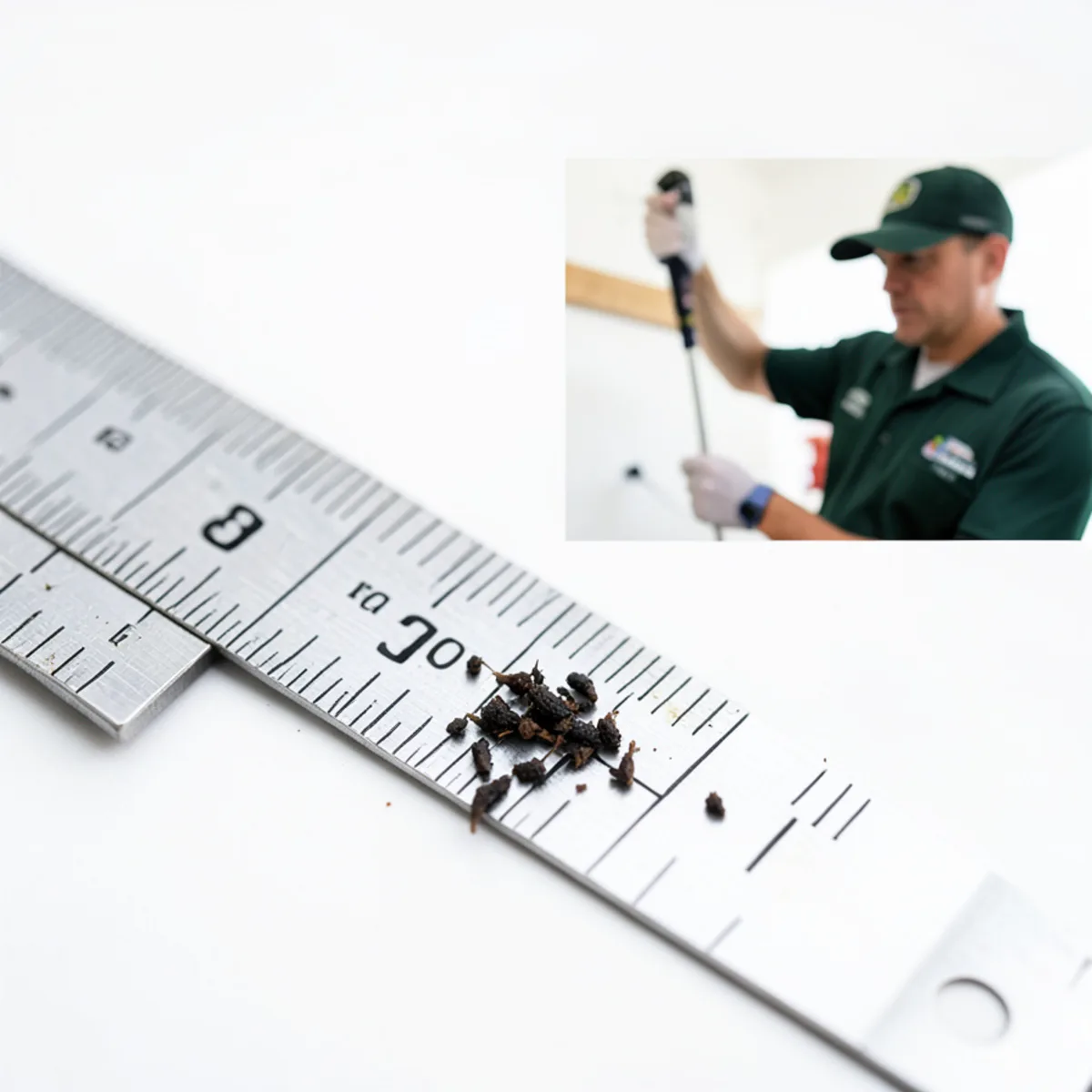
Because mice are neophobic—naturally cautious of new objects in their territory—experienced technicians do not simply scatter traps at random. Rodents have oily coats that deposit dark, waxy grease marks ("rub marks") along floor-wall junctions, pipes, and joist headers as they repeatedly run the same paths. Identifying active runways and fresh, moist droppings dictates precise snap-trap placement directly along travel conduits. Combining mechanical traps with non-toxic tracking powders confirms when all family units have been eliminated before permanent exclusion sealing is completed.
EPA Tier 1 Tamper-Resistant Exterior Bait Stations & Non-Target Wildlife Safety
While interior rodent control relies strictly on mechanical trapping to prevent dead animal odor inside finished drywall bays, exterior perimeter management requires tamper-resistant bait stations. Under EPA rodenticide mitigation standards (40 CFR § 152.170), exterior bait formulations must be secured inside tamper-resistant Tier 1 bait stations anchored to concrete foundations or stakes. These heavy-duty stations feature internal baffles that admit rodents while preventing access by domestic pets, non-target songbirds, squirrels, and curious children. Formulations utilizing micro-encapsulated second-generation anticoagulants or cholecalciferol are inspected monthly to intercept migrating field mice along exterior foundation perimeters before rodents locate structural entry fissures.