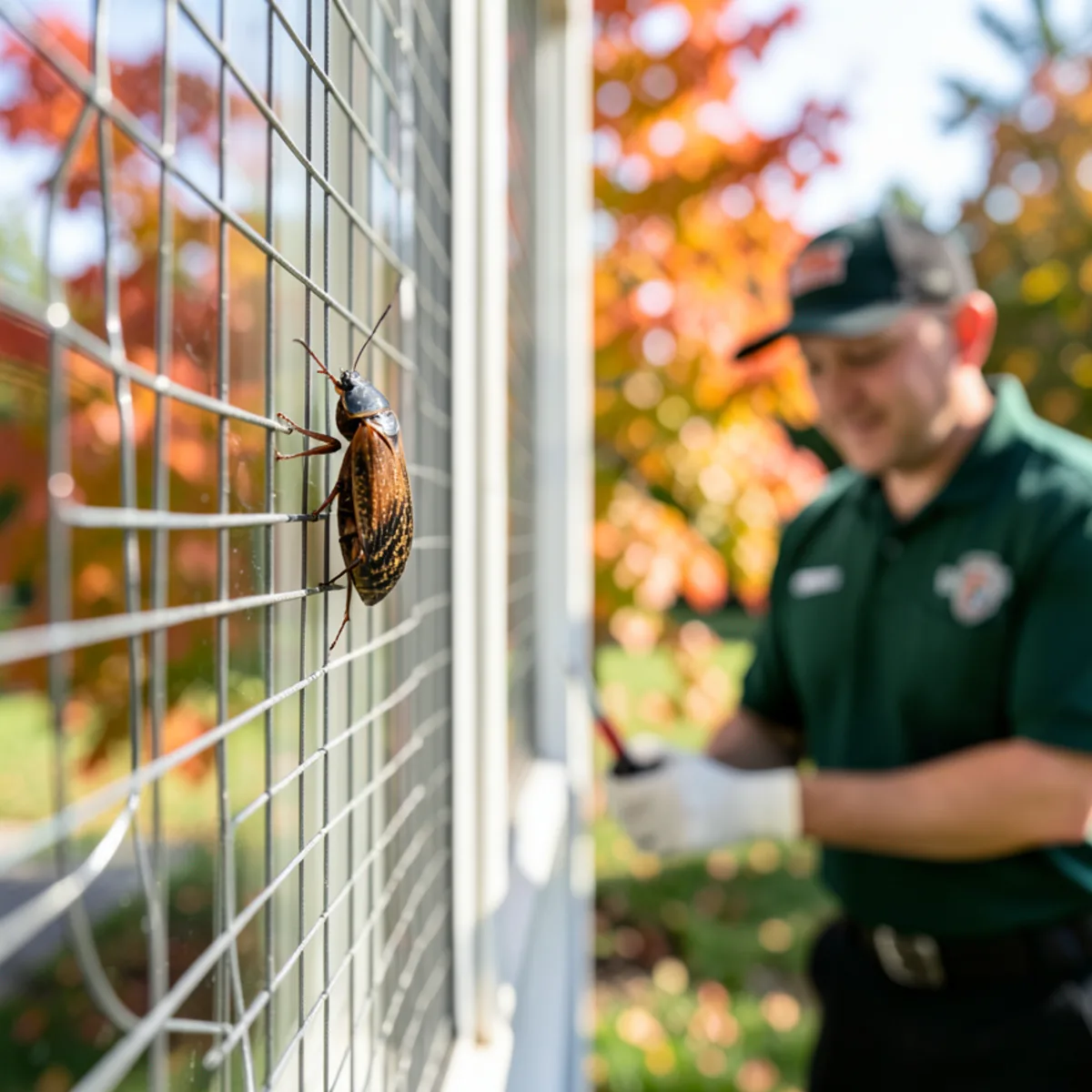
Every autumn, millions of brown marmorated stink bugs swarm western Pennsylvania homes. Learn why they cluster on your walls and how to safely exclude them without odor.
Biological Profile: Understanding Halyomorpha Halys Diapause
To effectively prevent stink bug invasions, Butler County homeowners must understand the biology of reproductive diapause. Unlike carpenter ants or termites that nest permanently inside structural wood, brown marmorated stink bugs use homes strictly as overwintering shelters. In late summer, shorter daylight hours trigger a hormonal shift in adult bugs, causing them to cease feeding and reproductive activity. Their metabolism slows dramatically, allowing them to survive freezing temperatures without eating until spring. If stink bugs successfully gain entry to insulated wall cavities, attic spaces, or basement floor joists, they remain dormant throughout the winter months. However, on unseasonably warm winter afternoons or when central home heating warms interior wall surfaces, disoriented bugs wake up prematurely and stumble through recessed lighting fixtures and baseboard gaps into heated living rooms.
Dealing with Active Pests in Butler County?
Call our local Butler dispatch desk at (321) 496-4080 for immediate guidance and inspection scheduling.
Fall Invaders Comparison: Stink Bugs vs. Lady Beetles vs. Cluster Flies
While brown marmorated stink bugs generate the most publicity in western Pennsylvania, Butler County homes frequently host three other nuisance overwintering insect species simultaneously. Identifying the specific insect allows for targeted barrier placement.
| Insect Species | Visual Appearance | Primary Attraction | Indoor Nuisance Behavior |
|---|---|---|---|
| Brown Marmorated Stink Bug | Shield-shaped, mottled brown, white antenna bands | South- and west-facing siding, window glass | Buzzing around lamps, pungent odor when disturbed |
| Multicolored Asian Lady Beetle | Domed oval, orange to red, black spots, white "M" mark on thorax | Light-colored vinyl siding, sunny gutters | Reflex bleeding of yellow foul-smelling fluid, biting skin |
| Cluster Fly | Dark gray, sluggish flight, golden hairs on thorax | Attic gables, upper-story window sash frames | Spinning sluggishly on window sills on sunny winter days |
| Boxelder Bug | Narrow black body with vivid red or orange wing markings | Boxelder, maple, and ash trees near siding | Congregating in large exterior sunning clusters, staining siding |
Seasonal Preparation Checklist for Butler County Windows & Attics
Taking practical physical measures in late August and early September dramatically reduces the volume of fall invaders that enter structural voids.
Checklist & Preventative Procedures:
- Inspect all window screen splines for tears, gaps, or warped aluminum frames.
- Remove window air conditioning units by late September or encase exterior housings with heavy-duty weather covers.
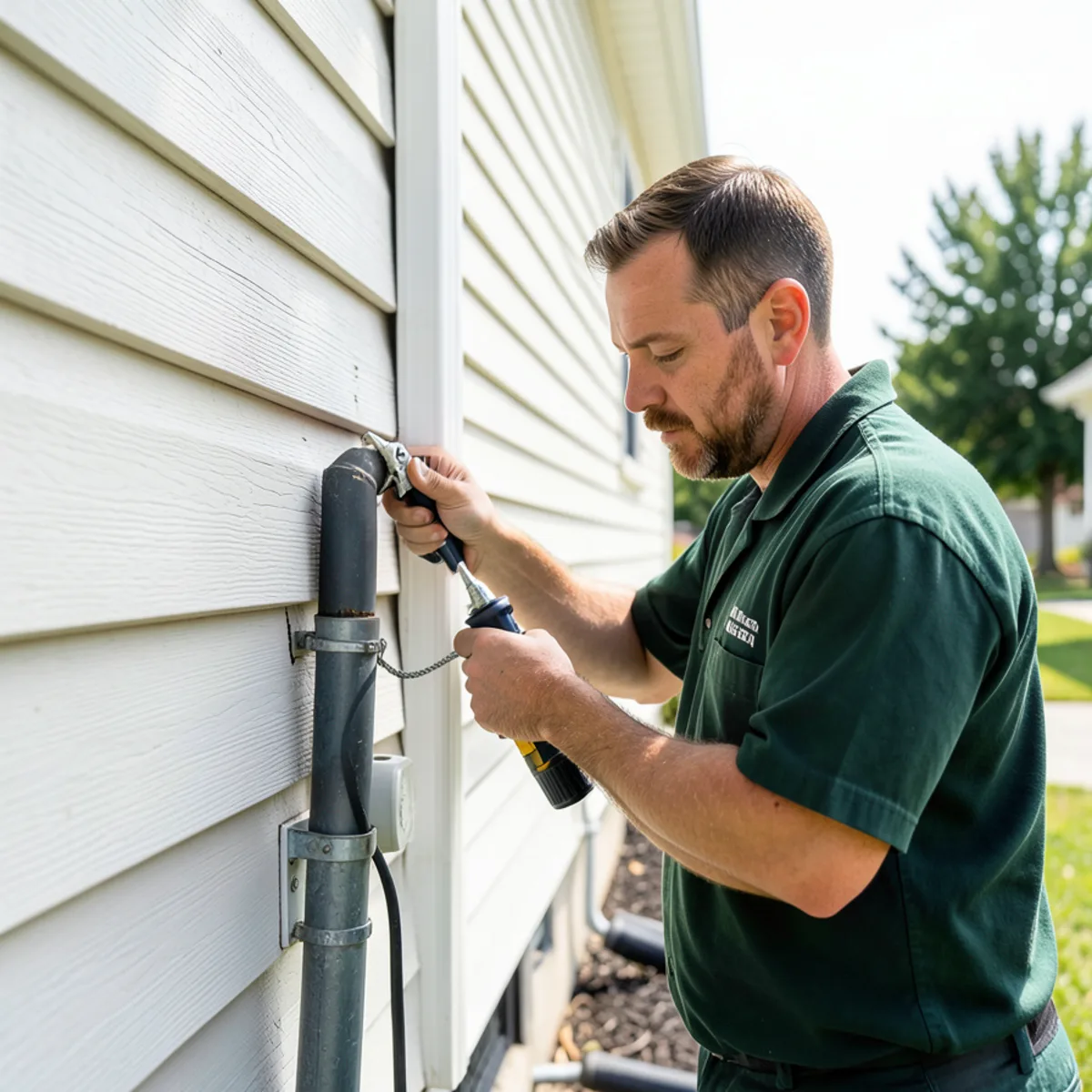
- Install durable copper mesh or silicone sealant around exterior gas, water, and electrical line entry penetrations.
- Fasten stainless steel mesh screening behind triangular attic gable louvers and ridge vents.
- Replace brittle rubber sweeps and weatherstripping on all exterior entry and garage doors.
The Great Autumn Migration: Why Stink Bugs Target Butler County Homes
If you live in Butler County, late September brings an unmistakable seasonal phenomenon: dozens of shield-shaped brown marmorated stink bugs (Halyomorpha halys) crawling on window screens, buzzing around outdoor lighting, and clustering on warm siding. Western Pennsylvania represents one of the dense agricultural and woodland regions favored by this invasive species. Throughout summer, stink bugs feed on wild black locust trees, apple orchards, and sweet corn and soybean fields across Saxonburg, Cranberry Township, and Center Township. As autumn temperatures drop below 50 degrees Fahrenheit, adult bugs enter a reproductive diapause and seek tight crevices to survive the sub-freezing winter.
Thermal Basking: Why South- and West-Facing Walls Get Hit Hardest
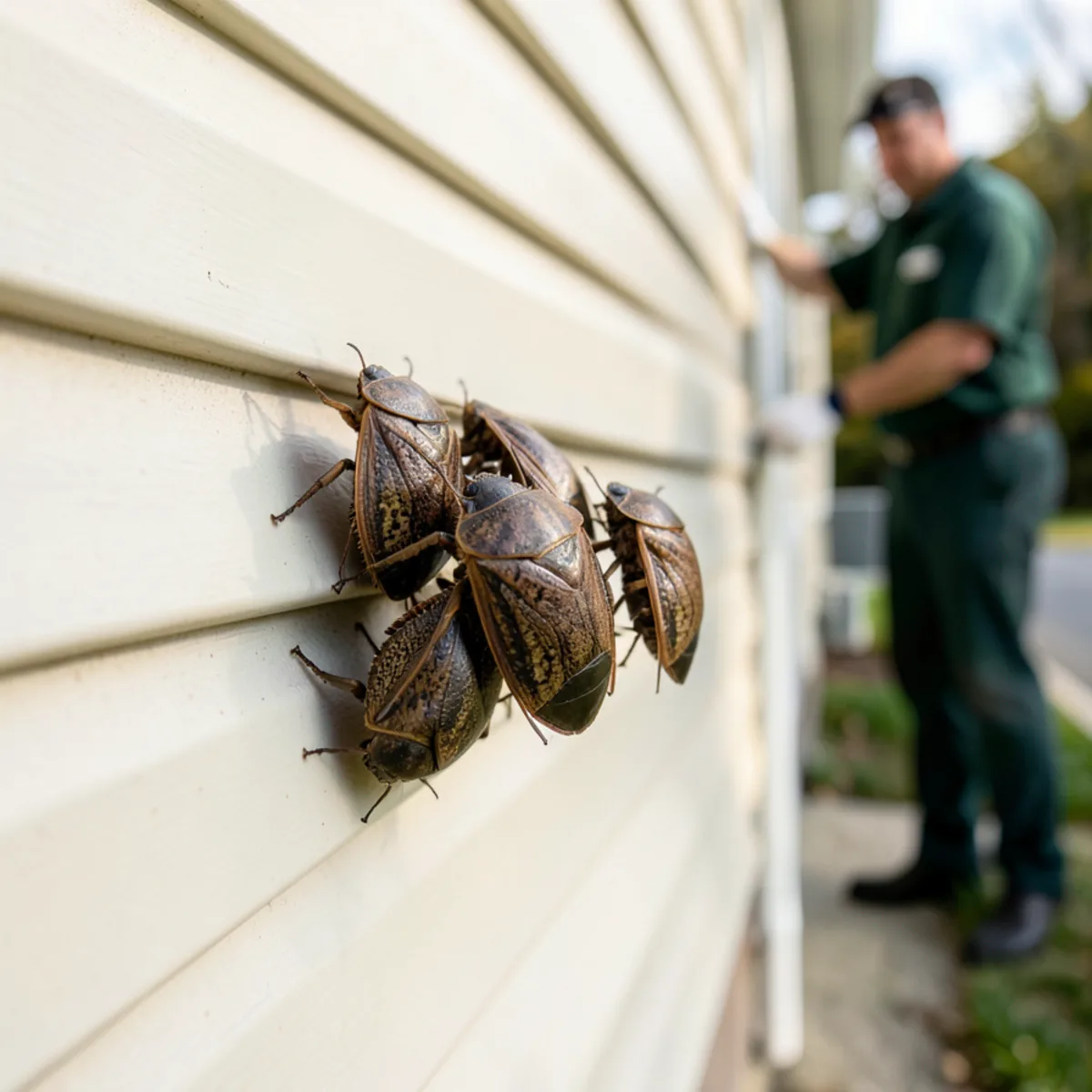
Homeowners frequently notice that stink bugs aggregate overwhelmingly on the south and west sides of their house. Between 2:00 PM and 6:00 PM, the late afternoon autumn sun warms light-colored vinyl siding, brick veneers, and window glass. Stink bugs take advantage of this solar heat to raise their core body temperatures before crawling into tiny structural gaps around window sills, roof soffits, and siding overlaps.
Four Critical Exclusion Steps Before Bugs Penetrate Wall Voids
The only reliable way to prevent hundreds of stink bugs from wandering into bedrooms during winter is sealing exterior entryways before mid-October.
Checklist & Preventative Procedures:
- Inspect and replace torn window screens and worn rubber door sweeps.
- Apply clear silicone or elastomeric caulk around exterior window trim, door casings, and utility pipe penetrations.
- Install fine stainless steel wire mesh (1/8-inch or smaller) behind triangular attic gable vents and roof ridge louvers.
- Remove or seal window air conditioning units before the September migration begins.
The Vacuum Trap Trick: How to Collect Indoor Bugs Without Releasing Odor
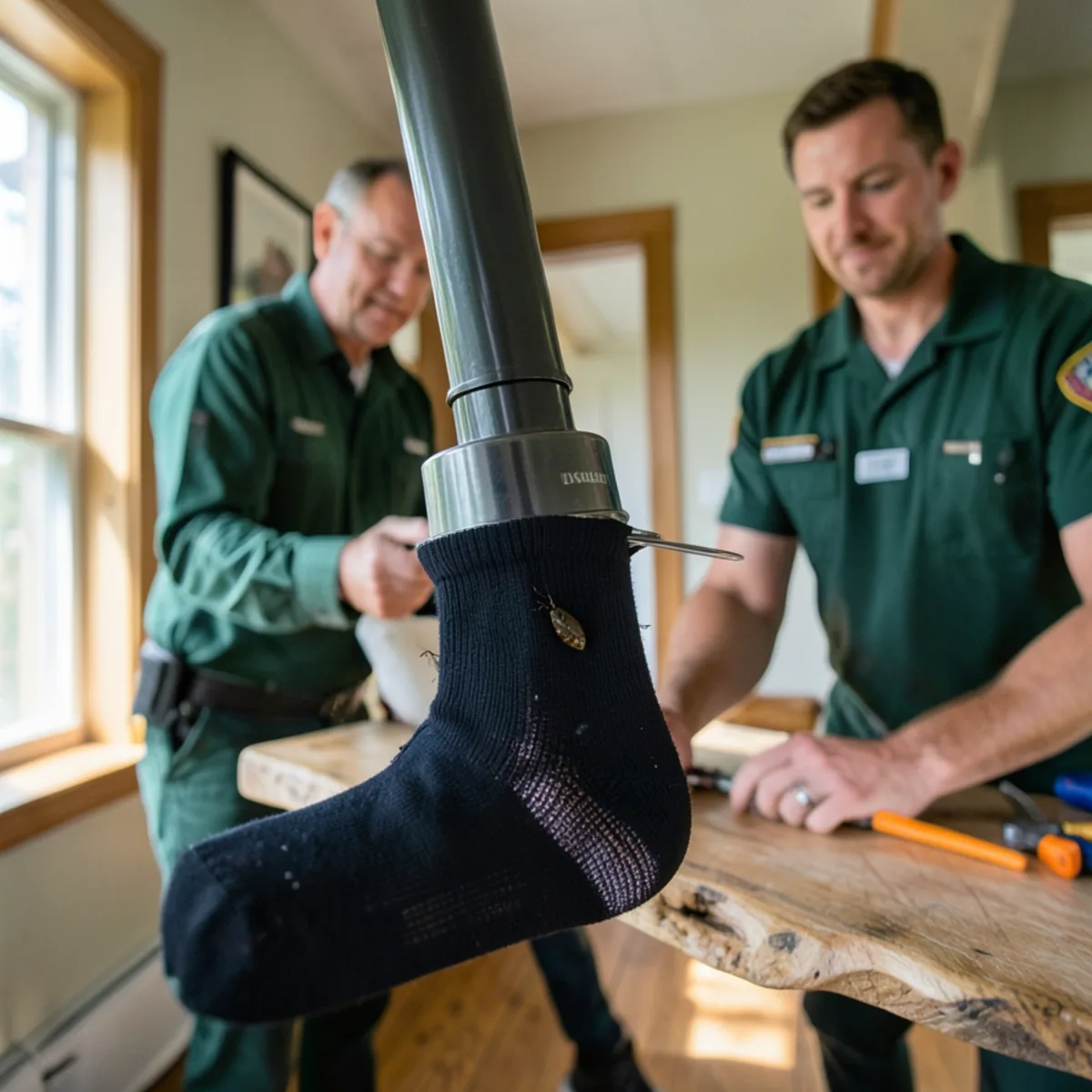
When live stink bugs manage to enter living areas, never swat, stomp, or squash them. When crushed, stink bugs discharge foul-smelling chemical compounds (trans-2-octenal) from thoracic glands that produce a pungent odor and stain fabrics. Standard vacuuming also exhausts the foul scent throughout your vacuum bag. Instead, slip a knee-high nylon stocking into your vacuum hose extension wand and secure the cuff over the outside with a rubber band. Vacuum the bugs into the stocking pouch, pull the stocking free, tie it off, and dispose of it outdoors.
Why Exterior Barrier Sprays Outperform Indoor Aerosols
Indoor bug bombs or aerosol foggers are ineffective against stink bugs because they cannot reach bugs sheltering behind wall insulation. Worse, aerosol sprays leave chemical residues on indoor surfaces. Professional pest control relies on timed exterior micro-encapsulated barrier applications applied to siding, gutters, and soffits in late summer, neutralizing insects as they land on the building exterior.
Integrated Mechanical Trapping vs. Vacuum Impeller Odor Traps
When live stink bugs penetrate interior window trim or ceiling corners, physical removal must be executed without triggering defensive scent emissions. The brown marmorated stink bug possesses dorsal abdominal scent glands that secrete a volatile blend of aldehydes, predominantly trans-2-octenal and trans-2-decenal. When a bug passes through an electric vacuum impeller, the mechanical impact pulverizes the insect, aerosolizing these chemical compounds throughout the exhaust motor and permanently odorizing vacuum HEPA filters. Homeowners can construct an effective in-line bypass trap by inserting a knee-high nylon stocking into the vacuum wand extension, securing the elastic cuff over the exterior nozzle with rubber bands. Suction pulls bugs safely into the mesh pouch without contacting the impeller chamber, allowing quick disposal into soapy water.